Formal Identity

M-SIPA Infrastructure Platform
Every economy leaves signals. M-SIPA transforms those signals into trusted financial identity.
M-SIPA is a community financial infrastructure platform that captures everyday economic behaviour, creates verifiable financial identities, and connects underserved communities to formal financial services.
People without bank accounts still work, trade, save, borrow, repay, produce, contribute, and build trust every day.
Millions remain financially invisible because no infrastructure captures, verifies, and transforms their economic behaviour into trusted identity.






Traditional financial systems are designed around requirements that many underserved communities cannot meet.
Formal Identity
Credit History
Internet Connectivity
Smartphones & Digital Literacy
Instead of relying only on formal records, M-SIPA converts everyday economic behaviour into trusted financial identity.
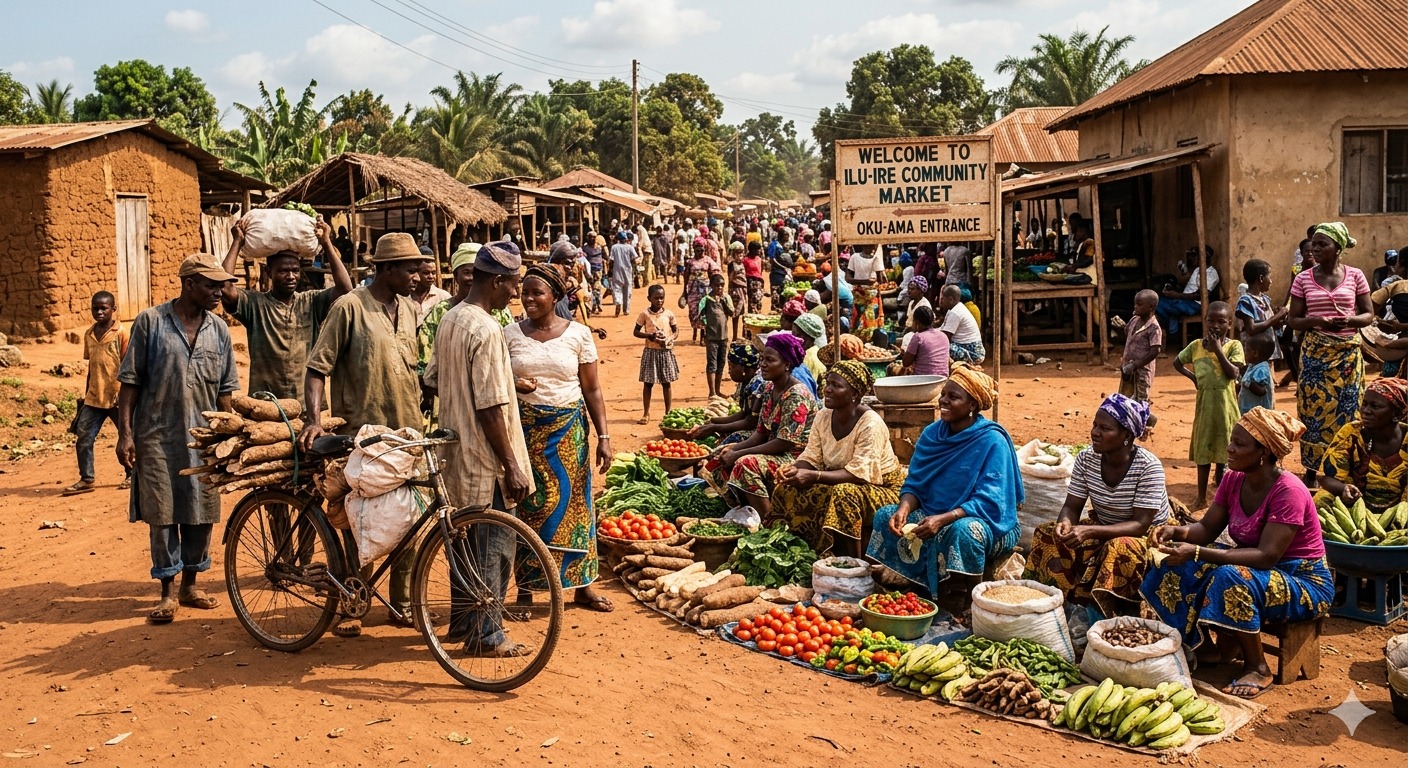
Communities, NGOs, cooperatives, farmer groups, women’s associations, faith-based organisations and humanitarian partners.
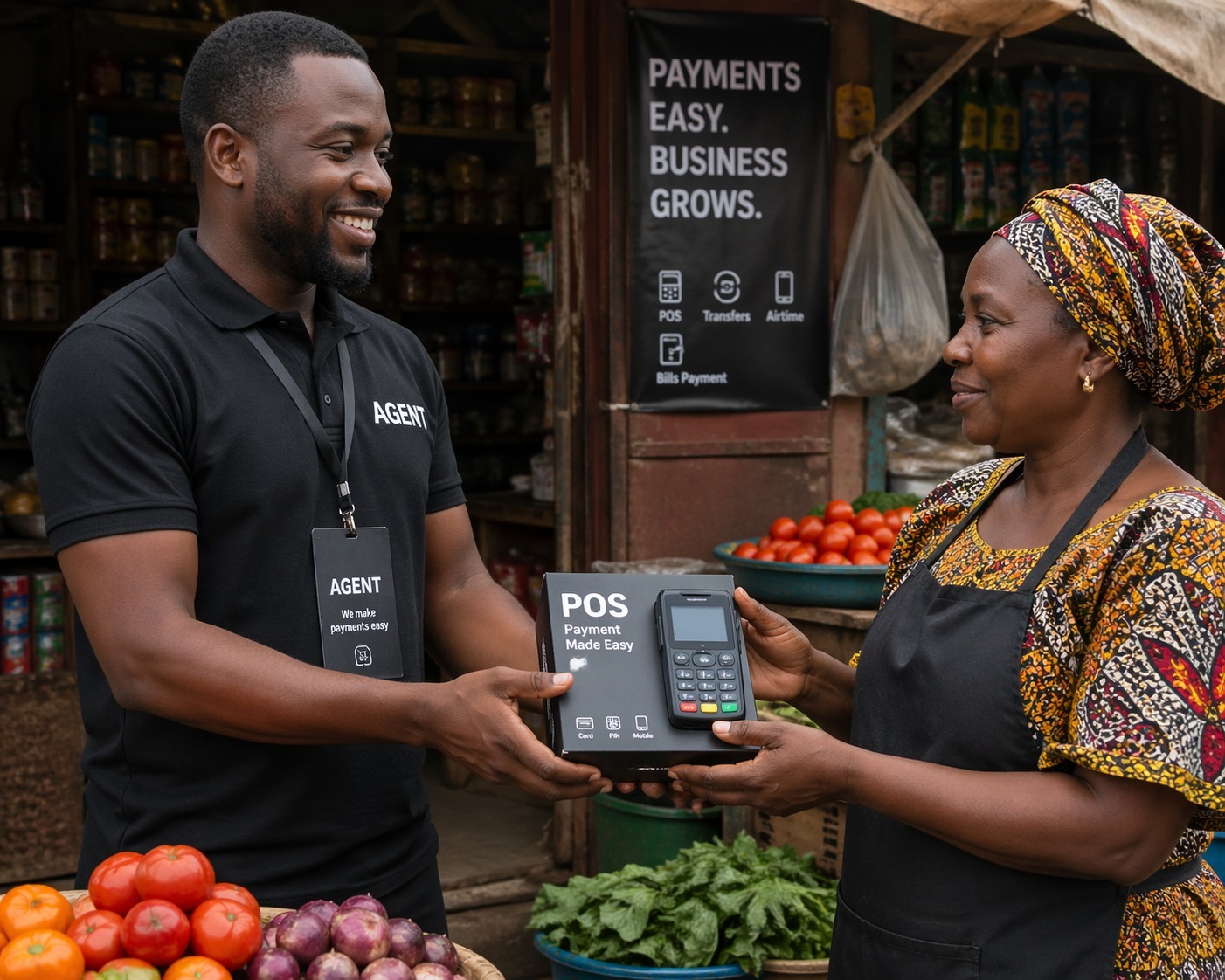
Local Agents use Mobile Devices for Offline Data Capture through Digital Forms, with support for Voice, USSD, Biometric Support, and GPS.
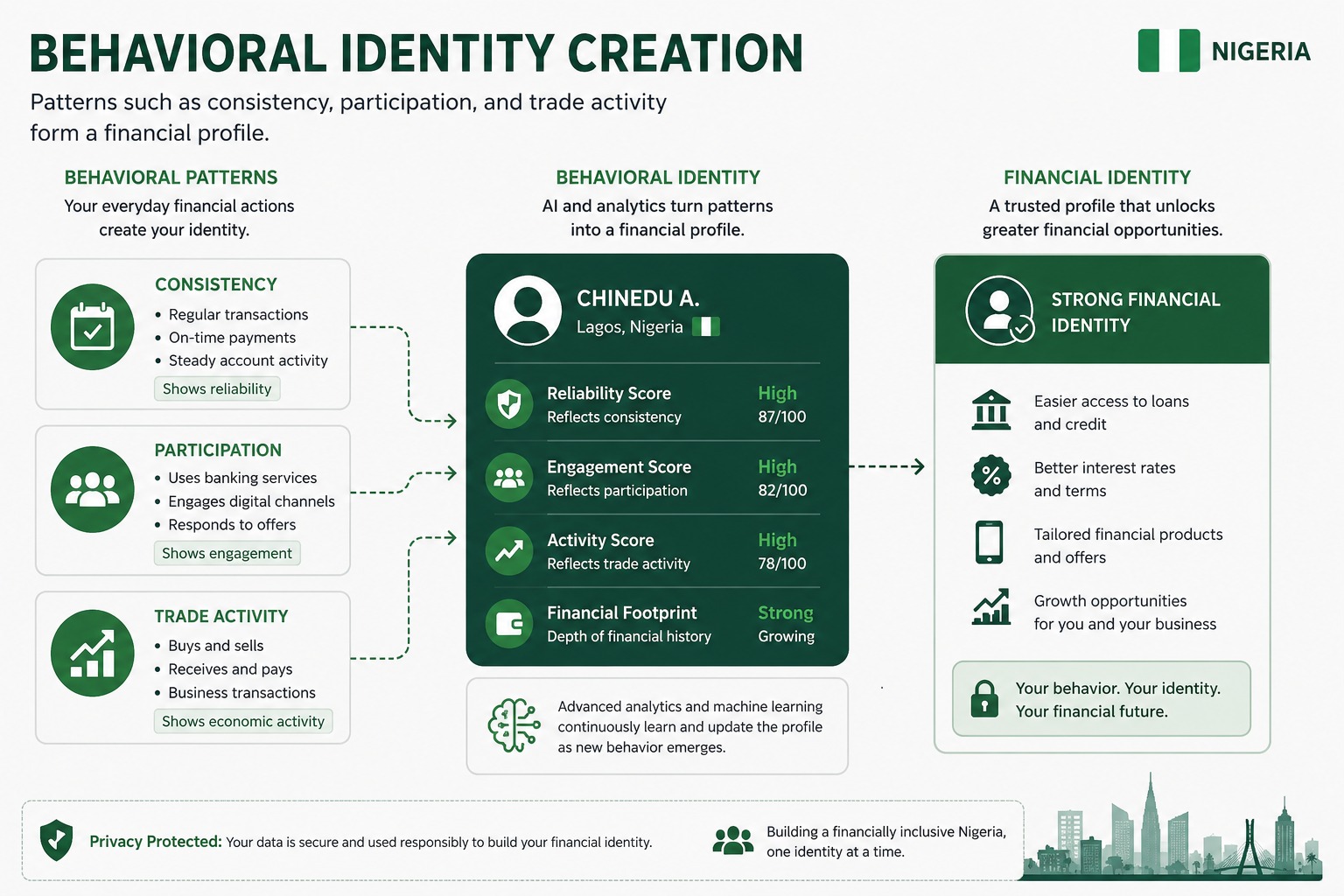
This becomes your intellectual property—capturing Savings, Attendance, Trading Activity, Repayment, Participation, Reliability, Community Trust, and Economic Behaviour. Instead of static identities, M-SIPA builds living economic identities.
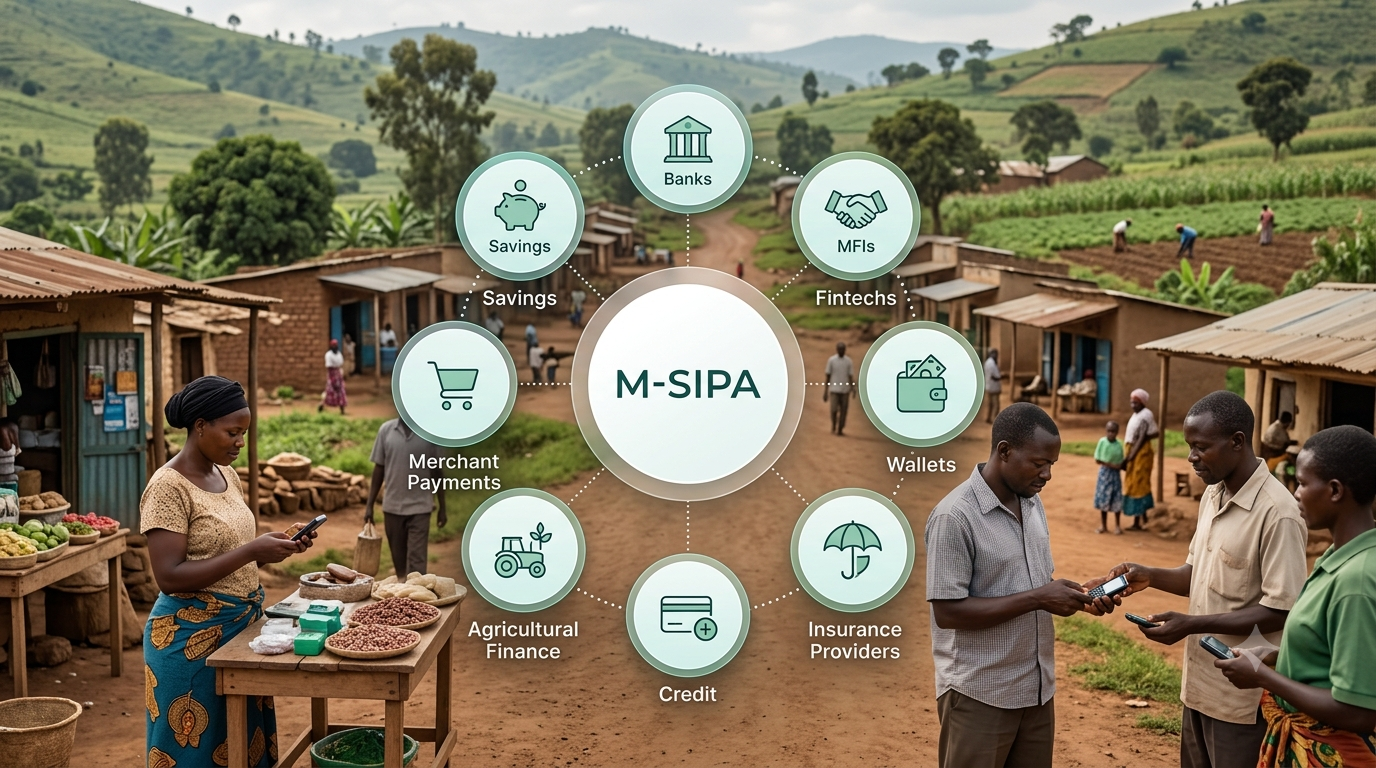
M-SIPA brings together Banks, MFIs, Fintechs, Wallets, Insurance providers, Government Transfers, Agricultural Finance, Merchant Payments, Savings, and Credit into a unified ecosystem.
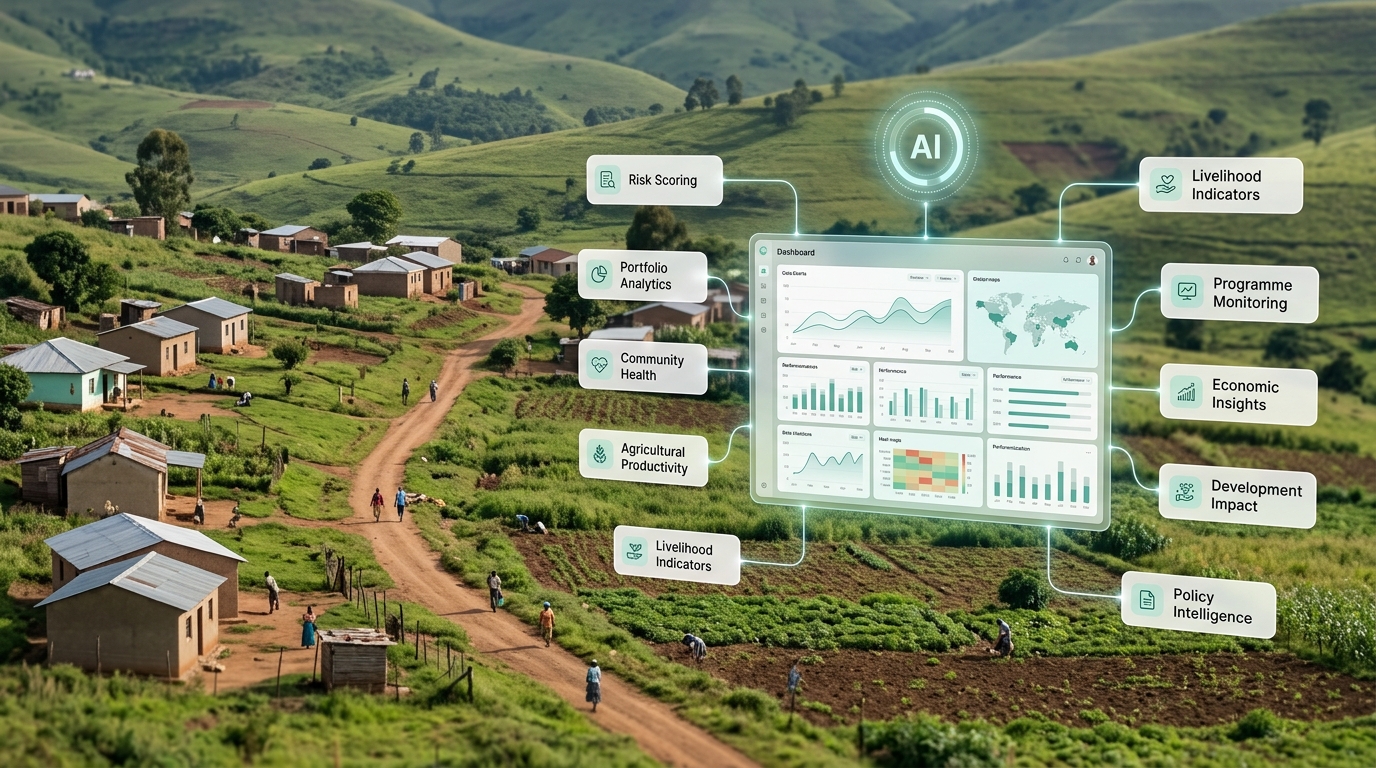
AI powers a competitive moat through Risk Scoring, Portfolio Analytics, Community Health, Agricultural Productivity, Livelihood Indicators, Programme Monitoring, Economic Insights, Development Impact, and Policy Intelligence.
A closed loop where every community interaction feeds back into economic growth.
The more communities use M-SIPA, the more accurate its behavioural models become.






| Traditional Financial Systems | M-SIPA |
|---|---|
| Formal ID required | Behaviour creates identity |
| Internet required | Offline-first |
| Smartphone required | Agent-enabled |
| Credit history required | Behavioural history accepted |
| One institution | Entire ecosystem |
| Static customer records | Living economic identity |
M-SIPA works because it adapts to real community conditions—offline access, agent support, and trust-driven systems.








A group of farmers contributes weekly through an agent. Their consistency builds a profile that qualifies them for seasonal credit.
Informal waste workers track daily activity through agents, creating a financial footprint for the first time.
Individuals without documentation participate in group systems that establish trust and identity over time.
M-SIPA collaborates with institutions, development organisations, governments, and financial ecosystems committed to building inclusive economic participation.
Whether you are a financial institution, development partner, or implementing organization, M.SIPA provides a practical pathway to reach communities that existing systems cannot.